
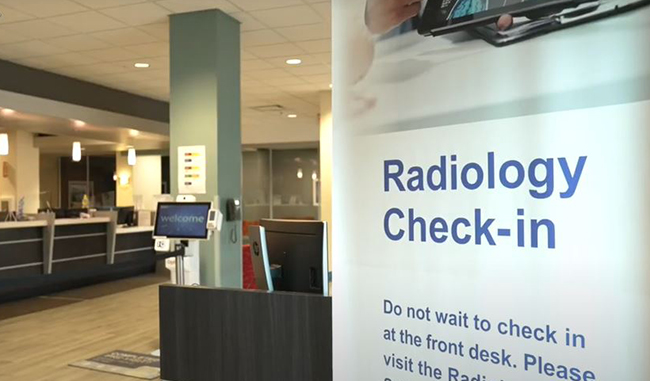
 Optum Radiology at Crystal Run Healthcare
 Same and next-day pediatric appointments

Do you have dense breasts? What it means for your mammogram
Do you have dense breasts? What it means for your mammogram
October is Breast Cancer Awareness Month, and it's a good time to check in on your breast health. If you've had a mammogram lately, you may have seen a note on your report about breast density. In 2024, the FDA began requiring all mammogram reports to tell patients whether their breasts are "dense" or "not dense." Here's what that means for you.
Breast density describes what your breasts are made of. Breasts contain three types of tissue: glandular tissue, fibrous tissue, and fat. Dense breasts have more glandular and fibrous tissue than fat. Density has nothing to do with breast size or how firm your breasts feel. You can't tell if your breasts are dense by touching them. The only way to know is with a mammogram.
If your report says you have dense breasts, there's no need to worry. Dense breasts are very common and completely normal. In fact, about half of all women who get mammograms have dense breast tissue.
Why breast density matters
If you have dense breasts, your risk of breast cancer is higher than it is for women with less dense breasts. Dense tissue can also make it harder for doctors to spot cancer on a mammogram. Knowing your breast density helps you and your doctor plan the right screening for you.
Here's why. On a mammogram, dense tissue and tumors both look white, so small cancers can blend in and be harder to spot. Fatty tissue looks darker, which makes tumors easier to see.
The good news: mammograms are still one of the best ways to find breast cancer early, even if you have dense breasts. 3D mammography, also called digital breast tomosynthesis, creates three-dimensional images of the breast. This helps reduce the overlapping tissue that can hide cancers on a standard 2D mammogram.
Types of breast density
After reviewing your mammogram, a radiologist places your breast density into one of four categories:
Category A: The breasts are mostly fatty tissue.
Category B: There are some areas of dense tissue mixed with fatty tissue.
Category C: The breasts have more dense tissue, which may make it harder to see small lumps.
Category D: The breasts are extremely dense, making it more difficult for a mammogram to find cancer.
Talk with your doctor
Ask your doctor about your breast density and whether you might need other screening tests, like a breast ultrasound or breast MRI, in addition to your mammogram*. Some women have other risk factors that may mean extra screening is right for them.
"Our best defense against breast cancer is early detection. Whatever your risk level or breast density, work with your doctor on a screening plan tailored to you—and keep up with the imaging and exams they recommend,” said Veronica Ferencz DO, MBA, FACOS, Crystal Run Breast surgeon.
Crystal Run Healthcare provides imaging and cancer care for women with breast cancer and those at higher risk. Our oncologists, breast surgeons and nursing staff work together to provide cancer care and treatment options. Crystal Run is recognized by the American College of Radiology as a Breast Imaging Center of Excellence. Services include digital mammography, stereotactic breast biopsy, breast ultrasound and ultrasound-guided breast biopsy.
Learn more about radiology services and the high-risk breast care program available at Crystal Run or schedule an appointment with your provider today.
*If you have dense breast tissue and your provider recommends a breast ultrasound or other supplemental imaging, coverage may vary depending on your insurance plan. Please check with your insurance carrier before your appointment to confirm coverage.
American Cancer Society. Breast Density and Your Mammogram Report. Accessed October 2026.
U.S. Centers for Disease Control and Prevention (CDC). Dense Breasts. Accessed October 2026.
Radiological Society of North America, Inc. (RSNA). Breast Tomosynthesis. Accessed October 2026.