
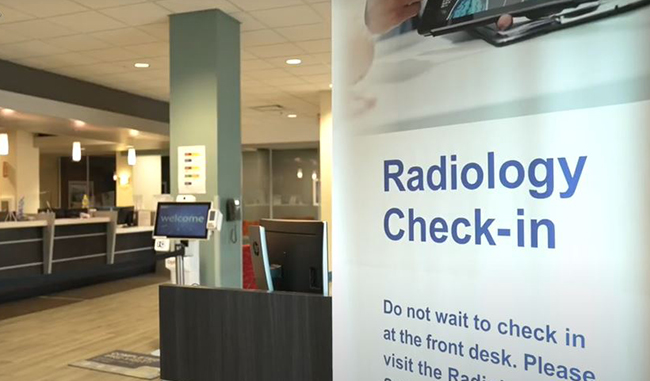
 Optum Radiology at Crystal Run Healthcare
 Same and next-day pediatric appointments
The difference between CT scans and MRIs
CT scans and MRIs both produce detailed images of the inside of the body. CT scans are better at showing bone structures. MRIs tend to be better at showing different types of soft tissue.
When physicians want to learn more about a health issue, they sometimes order medical imaging to take a closer look inside the body.
Computed tomography (CT) and magnetic resonance imaging (MRI) scans are two types of high tech medical imaging scans patients can get in hospitals or radiology centers. Care delivery organizations, like Crystal Run Healthcare, also offer radiology services in-clinic as part of an expanded care network.
Physicians use these images to make diagnoses and plan treatment. The type of imaging the physician chooses depends on the health issue and what they want to see in the body.
CT scan vs. MRI
Here’s a comparison of both types of imaging.
Similarities between a CT scan and an MRI:
- Both create detailed images of the inside of the body.
- Both require lying down inside a large tunnel-like machine.
- Both are painless, though staying still may be uncomfortable for some people.
- Both types of scans can check for tumors.
Differences between a CT scan and an MRI:
- CT scans use X-rays (and involve a small amount of radiation); MRIs use magnets and radio waves.
- CT scans are generally faster and usually less expensive than MRIs.
- CT scans are a top choice for detecting bone injuries and certain types of trauma; MRIs offer better detail for many soft tissues like tendons and ligaments.
- CT scans might help physicians spot some types of cancers or bleeding quickly; MRIs can help clarify the exact location and details of a tumor or bleeding.
Computed tomography (CT) scans
CT scans combine many two-dimensional X-ray images of the body to produce a three-dimensional (3-D) image.
The final 3-D image gives a more detailed picture than individual X-rays. These scans can show organs, soft tissues, bones and blood vessels.
Another word for a CT scan is a CAT scan.
- Purpose: Physicians often use CT scans to check for tumors, infections, blood clots or internal bleeding. They provide a better look at bones, lung and chest issues and some cancers than MRIs.
- Procedure: The person lies on a bed that goes into a tube in the CT scan machine. The imaging technician may give the patient a contrast dye injection or an oral contrast agent beforehand. This can help highlight specific areas or problems.
- Time: A CT scan takes about 5 to 10 minutes.
- Risks and precautions: A CT scan exposes people to radiation. It uses more radiation than a regular X-ray, but this is still a low amount. Pregnant people, those who are allergic to the contrast dye, or those with kidney conditions, should talk with their doctor before getting a CT scan. Their doctor can order the CT scan without contrast dye or discuss other imaging solutions depending on the person’s health conditions.
Magnetic resonance imaging (MRI) scans
MRIs use radio waves and a strong magnet to produce images of the inside of the body. They let physicians see bones, organs and different types of soft tissues.
- Purpose: Physicians use MRIs to get clear pictures of abnormal tissues, especially tendons, ligaments, the spinal cord and other soft tissues.
- Procedure: Before the healthcare team takes the scan, they will ask the patient to remove any metal from their body and may inject them with a contrast dye. The person lies on a table and goes through a tube in the MRI machine. The MRI machine makes loud noises, so the person may get headphones to wear during the scan.
- Time: An MRI takes about 30 to 60 minutes.
- Safety: Unlike CT scans, MRIs don’t use radiation and have no health risks. However, an MRI has powerful magnets. People with metal inside their bodies may not be able to get an MRI. This includes piercings that cannot be removed, medical implants and screws or plating from previous surgeries.
Frequently asked questions about MRIs and CT scans
Here are answers to some frequently asked questions about these medical imaging scans.
Which is better for brain scans, an MRI or a CT scan?
MRIs can take detailed images of the brain that let doctors see brain issues and plan treatment for conditions like dementia and brain tumors.
Healthcare teams use MRIs more frequently than CT scans to investigate brain or spinal cord tumors, but CT scans are still helpful for people who can’t get MRIs.
Ultimately, each imaging technique has benefits and drawbacks.
Can a CT scan detect cancer?
Yes, physicians sometimes use CT scans to detect cancerous tumors.
MRI vs. X-ray
X-rays are suitable for showing bones, but don’t give detailed images of soft tissues. This is the specialty of MRIs.
Takeaway
CT and MRI machines may look similar in the doctor’s office, hospital or radiology center.
Both types of scans create detailed images of structures inside the body. Both are better at visualizing soft tissue than X-rays, but MRIs provide finer detail when it comes to soft tissues. On the other hand, CT scans are better at showing detailed images of bone.
To find out the best type of medical imaging for a particular health issue, talk with a physician.
Optum Radiology at Crystal Run Healthcare offers radiology appointments at convenient hours on weekdays, evenings and weekends, in multiple locations. For more information, visit our radiology specialty page.
- Facts about computed tomography (CT) scans. (2024). https://www.cdc.gov/radiation-health/data-research/facts-stats/ct-scans.html
- Magnetic resonance imaging (MRI). (2023). https://familydoctor.org/magnetic-resonance-imaging-mri/
- Tests for brain and spinal cord tumors in adults. (2025). https://www.cancer.org/cancer/types/brain-spinal-cord-tumors-adults/detection-diagnosis-staging/how-diagnosed.html